96% of German apartment buildings still do not utilise solar energy. In a country where apartment buildings account for more than half of its residential stock, this is a missed opportunity for the energy transition. For Andreas Eberhardt, that gap in the market became a calling, leading him to co-found Pionierkraft.
“I basically grew up in an entrepreneurial environment – my parents had their own electrical and solar companies” he says. But while he had plenty of hands-on, practical experience with solar, it was only during his studies of renewable energy and deeper market research that something started to bother him. The technology existed. The installers existed. Yet apartment buildings were still being left behind.
In 2014, during his bachelor’s thesis, the pieces started clicking into place. “I was thinking about how to tap into this market opportunity. For me, this was the start of everything.”
That idea would become Pionierkraft, the company he co-founded with Nicolas Schwaab to make solar viable for small and medium-sized apartment buildings, without drowning landlords in bureaucracy.
It was also a way to turn his passion for solar into real impact – the principle that defines Andreas and drives both his ideas and business model.

The problem no one solved properly
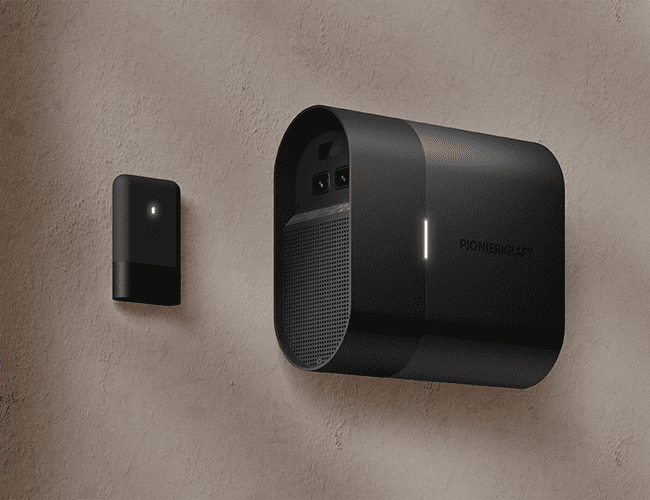
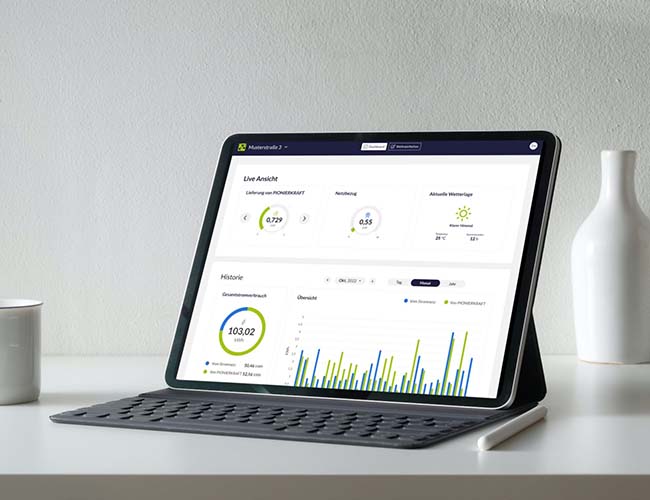
At its core is a patent-protected energy-sharing device that can be installed in about an hour. This is combined with a digital platform that handles billing, monitoring, and operations. Solar power generated on the roof is prioritised for participating apartments. Tenants can keep their existing electricity suppliers. And landlords do not become full energy providers.
“What sets us truly apart is that we productise otherwise complex processes,” Andreas says. “I see a blue ocean of potential for us.”
The numbers support the ambition. Pionierkraft has already sold more than 2,000 sharing solutions. And when the company released a new product version last year that significantly reduced costs, they achieved a major breakthrough.
“We brought down the cost dramatically, and we received for the first time a huge bulk order,” Andreas says. “For us that was the ultimate validation of our technology – seeing that people were, literally, buying into it.”
Charting new territory
Founding a company in an emerging category may sound exciting. But the reality can be a lot more daunting.
“You have no framework for anything,” Andreas says. “You’re dealing with technology that hasn’t been built before, and regulation that isn’t in place yet. You can only go step by step.”
In that spirit, Andreas and his team went one decision at a time, focusing on incremental progress – a principle long used by top athletes. It comes as no surprise, then, to learn that his mindset is shaped partly by sport.
When asked what advice he would give his younger self, he answers without hesitation: “Listen to your gut. Rather go for too visionary than for too down to earth. And if you went down the wrong path, turn around and go the other way. Don’t wait too long.”
Turning potential into demand
After raising a Series A and an extension round, Pionierkraft is now in scaling mode. “You need to be in the driver’s seat and create a demand and not just wait for it,” he says. “In a nascent market… this is very expensive.”
Proving that Pionierkraft’s technology works is no longer an issue. The task now is to build awareness and trust among a conservative segment of the real estate market.
This is where ecosystems and partners matter. InnoEnergy has supported Pionierkraft since 2019, providing exposure and crucial introductions.
“We could not have accomplished this without having these very warm intros,” Andreas says, referring to one key regulatory connection. “InnoEnergy’s intros helped us by getting a credit of trust and acceptance from more established stakeholders.”
Trust, in fact, is a recurring theme in his discussion of growth.
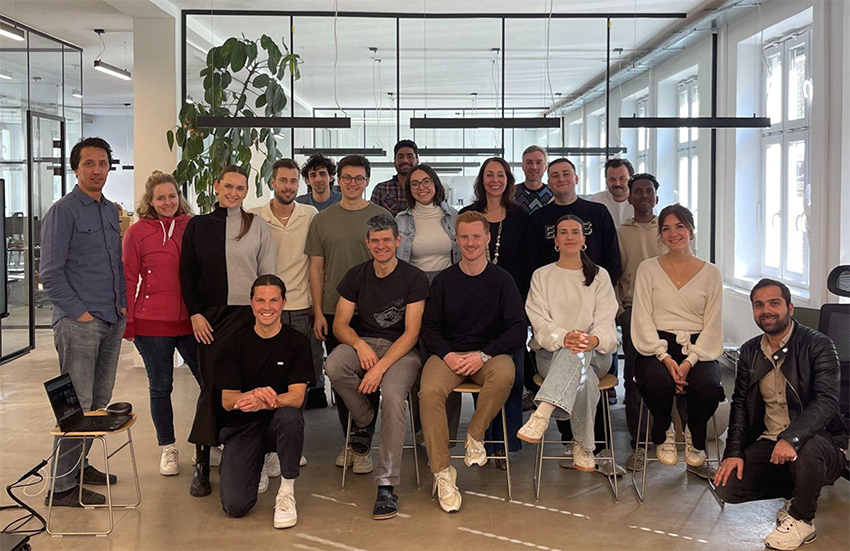
Deep trust within the team at the core
Speaking about his team, he smiles. “I draw a lot of energy from this deep trust,” Andreas says. “We all rely on and back each other – in good as well as in difficult times.”
For some, entrepreneurship can be isolating, but for Andreas, it’s extremely collaborative.
“I’d like to thank my team from the bottom of my heart for their massive support – and endurance – on that long journey that we have been on together,” he says. “You cannot come this far without a strong team and that kind of trust in each other.”
Seizing the opportunity – like riding the next wave
Outside of work, Andreas is an avid surfer, and he sees many parallels between being out in the water and running his business.
“There’s the very active part of paddling… but also you cannot force the wave to come,” he says. “When it comes, however, you have to act and seize the opportunity”.
It is a fitting metaphor for both the energy transition and entrepreneurship.
Clearly, being as impact-driven as he is, Andreas has not been waiting on the shore.