In 2024, global battery demand crossed the 1 terawatt-hour (TWh) mark for the first time. By 2030, the International Energy Agency expects demand for electric-vehicle batteries alone to exceed 3 TWh – a 300% increase from today. With this rapid expansion comes a critical question: how do we manufacture next‑generation battery materials at scale?
For years, solid state batteries have been hailed as a potential game changer. Using solid electrolytes instead of liquid ones, they promise higher energy density, longer ranges, and faster charging. However, the technology has yet to see widespread adoption in the mass market.
Munich-based start-up Qkera is tackling exactly this challenge. A spinoff from Technical University Munich (TUM) and Massachusetts Institute of Technology (MIT), the company has developed a new class of solid electrolytes which can be applied to existing lithium‑ion, lithium‑metal, silicon and solid‑state batteries as a simple drop-in solution. They can be manufactured at scale and at low cost while delivering up to double the energy density than current commercially available battery types. What’s more, their ultra-thin and flexible designs enable different applications from electric car to smartphone batteries.
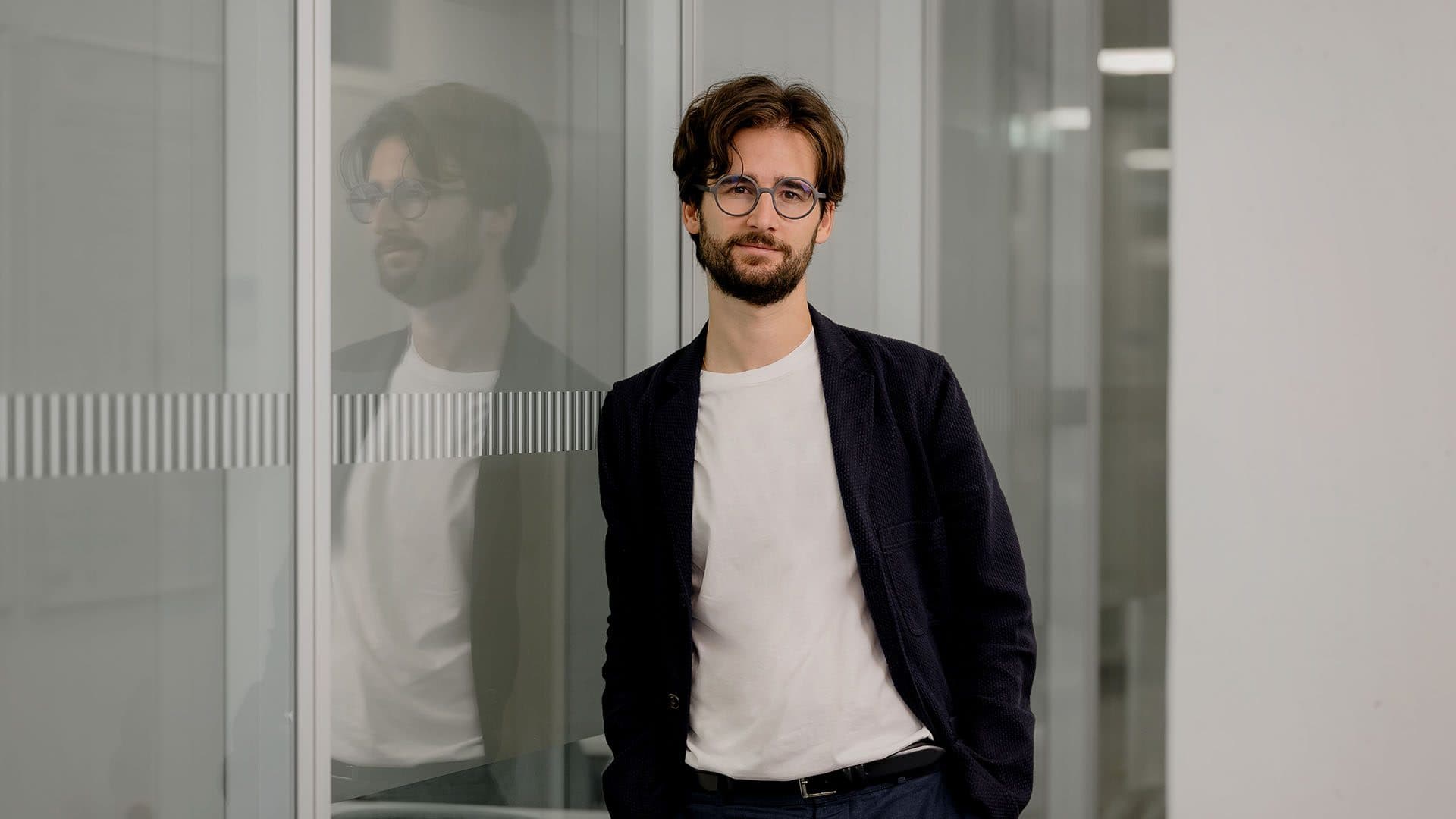
And, curiously, their unique properties stem from breakthroughs in a material that is abundantly available and very close to what a standard coffee cup is made of: oxide ceramics. One of the masterminds behind this work is co-founder and Managing Director PhD Andreas Weis.
Driven by curiosity and science
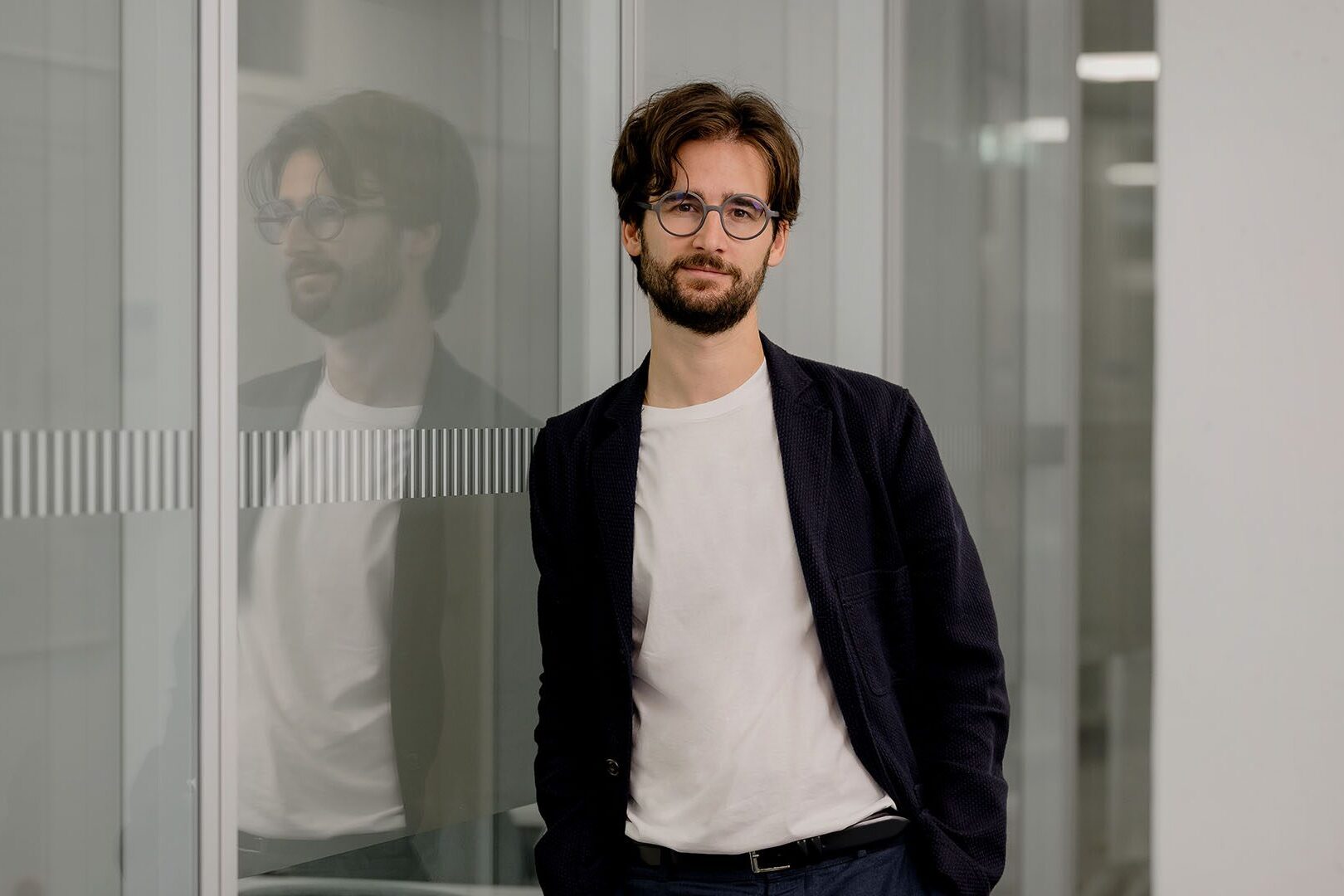
From a young age, Andreas was eager to understand how things work. Encouraged by his parents – especially his father who had a short stint as a high school chemistry teacher – he experimented early and often. “The scientific edge was always there,” he recalls. “We were doing chemistry experiments from a very young age.”
Those early experiments shaped how he saw the world. Chemistry and physics became the tools he used to understand things; which then evolved into a passion for one of the most pressing scientific topics of our time: clean energy. Growing up in a small town in northern Italy taught him self-reliance. “The ‘just do it yourself’ mentality was always there.”
A scientist first, an entrepreneur by necessity
Nonetheless, entrepreneurship wasn’t part of Andreas’ original plan. “In complete honesty, I always saw myself as a scientist first”, he says. But as his studies in Munich increasingly focused on materials science and energy, a new path emerged. As research topics grew closer to real-world questions, founding a company became a logical step.
Munich’s deep-tech ecosystem reinforced this direction. “You have brilliant founders and leaders everywhere who pushed me and said, ‘Do it yourself. You have the skills, the capabilities, the connections.’”
One of them was Andreas’ fellow co-founder Jennifer Rupp whom he met shortly after she had been appointed professor at Technical University Munich at a lecture on oxide ceramics which she had been researching her entire career. The rest is history. “In the end, founding our company was a no‑brainer,” Andreas recalls.
Making materials practical – and scalable
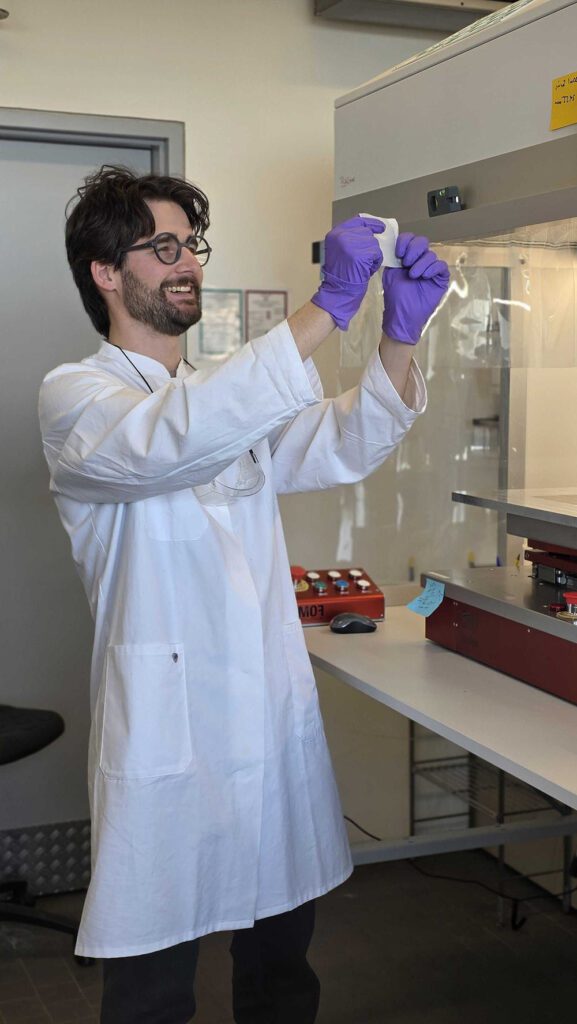
Ask Andreas what Qkera does, and he starts with materials. “These humble oxide ceramics have the robustness, stability and high conductivity needed to commercialise next‑generation batteries.”
Plus, they can be made without rare raw materials that are often imported from crisis regions.
“Our technology makes it possible to make high-performance batteries with lithium iron phosphate cathodes that actually show lower output than cobalt-based alternatives – but the material can be mined in Europe,” explains Andreas.
But practicality has long been the problem to manufacture them at industrial scale.
Asked about Qkera’s breakthrough, Andreas states that the team developed “a process that makes these large-scale and flexible – bringing them into mass‑market applications”; enabling battery technologies to diversify rather than converge toward a single architecture.
When scale changed everything
Scalability is one of the central challenges in battery innovation. “With ceramic, the limitations of size are a major bottleneck,” Andreas explains. The team’s “aha” moment came quickly. “In under two months from the first proof of concept, we scaled up the size of our electrolyte by over 200%.” Considering that it took ten years for the entire research field around oxide ceramics for batteries historically to produce a sample just 10×10 cm in size, Qkera’s pace was exceptional. “If there was an aha moment, that was definitely it.”
From science papers to selling products
The biggest shift for Andreas wasn’t scientific – it was behavioural. “I think the toughest obstacle is getting away from the too‑scientific angle and understanding that you have a product to deliver.”
Instead of focusing on how something works, he had to lead with why it matters. “Most people don’t want beautiful scientific papers. They want hard facts: what can this product deliver?” That mindset change reshaped Qkera’s operations and pushed the team to define progress in commercial terms.
Learning to lead by letting go
A major point of pride for Andreas is how his leadership has evolved. Letting go of control and empowering his team was a turning point, moving trust and autonomy right at the centre of Qkera’s culture. “Instead of being in the lab and doing everything yourself, you have to hand over key tasks with full conviction: ‘You’re capable, you can do it.’”
InnoEnergy support: capital and connections
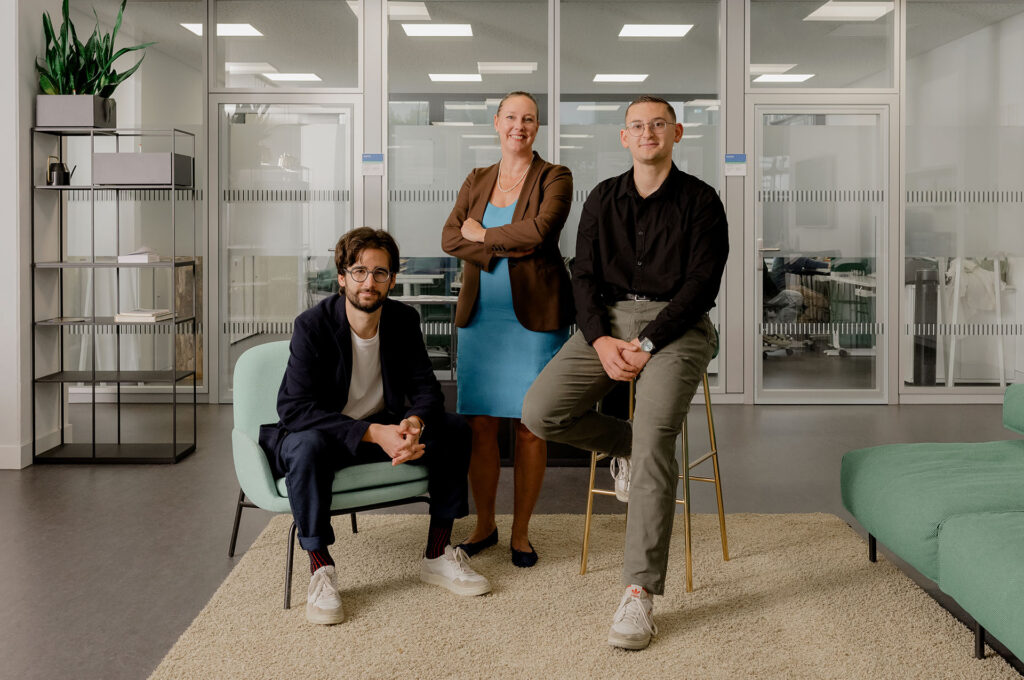
“InnoEnergy enabled a pre-seed round for us, which was massive as we needed to show that this technology works at scale,” Andreas explains.
But capital wasn’t the only advantage. “The connections they have are invaluable – energy industry leaders, decision‑makers in the battery sector. I don’t think there’s a VC fund or other clean tech investor in Europe with that breadth of connections.” He highlights advisors like Peter Schuhmacher and the introduction to the European Battery Alliance as instrumental. “We wouldn’t be here without these people.”
What success means
When asked about success, Andreas sees it on two levels. “A competitive and resilient Europe that can drive its own green energy transition – that would be amazing.” On a personal level, he returns to the core of his motivation: science. “Scaling a product from lab to market is one of the most exciting journeys you can pursue. Success for me is being able to follow this path and turn Qkera into a household name in the battery industry.”