Rebuilding Europe’s solar manufacturing is vital for energy security. Discover how innovation, circularity and a strong industrial policy can strengthen key EU clean tech.
Over the past year, several more European solar manufacturers have filed for insolvency. The slow erosion of domestic manufacturing is often referred to as Europe’s first cleantech failure, and a stark illustration of the gap between climate ambition and the industrial capacity needed to deliver it.
Once an early leader in solar innovation, Europe has been overtaken. China controls more than 90 per cent of every stage of the photovoltaic value chain, from polysilicon and wafers to modules. It’s the result of a decade-long industrial strategy designed to meet soaring global demand for renewables.
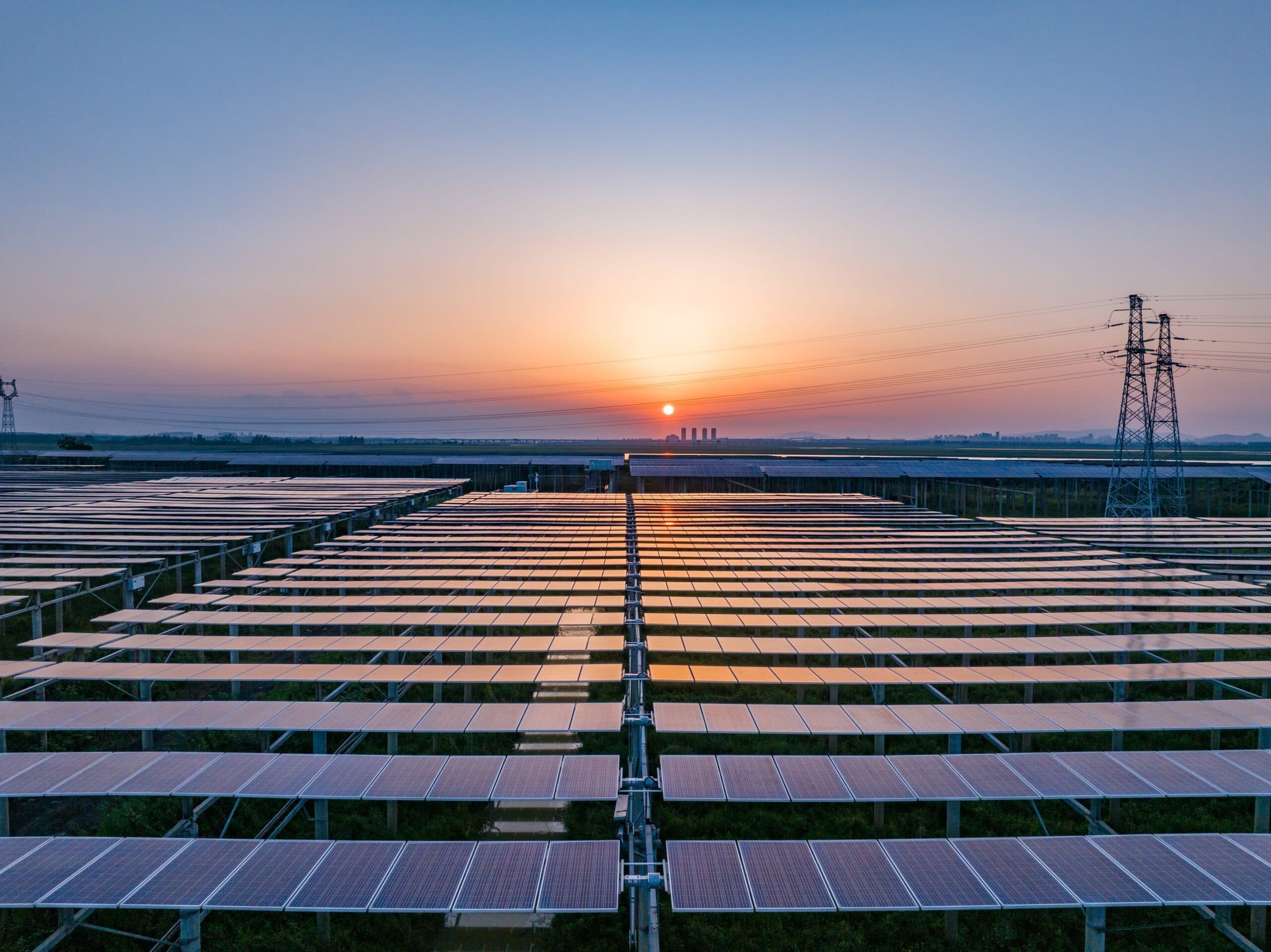
It must not be forgotten that solar deployment in Europe is booming. EU countries installed a record 65.5 gigawatts of new capacity in 2024. Yet the hardware behind that growth still arrives overwhelmingly in shipping containers from Asia. In numbers: the EU currently accounts for around 1% of global PV cell and module manufacturing capacity and relies on imports for around 94% of its supply.
Strategic security assets
The temptation would be to surrender and step back from domestic manufacturing. But that would be a mistake.
Solar panels are not only central to the clean energy transition; they are strategic assets. Control over manufacturing key components is foundation to our security in Europe. Reports this year of communication devices found in Chinese-made solar inverters deployed in Europe have highlighted the risks of over-dependence on external supply chains. We are also left exposed to price volatility in a market we have very little stake in.
Building win-win partnerships
The priority must be to anchor critical stages of the value chain physically and legally in Europe. This includes strategic upstream segments such as polysilicon, ingot and wafer production which form the backbone of the photovoltaic system. Securing upstream segments is critical to strengthening security of supply for midstream manufacturers in cells and modules.
Despite the setbacks, the project pipeline of solar manufacturing projects is increasingly diverse, spanning the full photovoltaic (PV) value chain and several EU countries.
In Germany, NexWafe is developing wafer technologies that aim to cut costs and emissions relative to standard Chinese methods. In Spain, Sunwafe is advancing domestic ingot and wafer production, supported by substantial public investment. In France, Holosolis is building a new PV cell and module manufacturing facility backed by the state. Meanwhile, other firms like Heliup are building next-gen ultra-lightweight panels for new use cases like rooftops with load constraints.
Circularity as a competitive advantage
Recycling is becoming a pillar of Europe’s emerging solar ecosystem. EU rules requiring the collection of end-of-life panels are creating the conditions for a circular industry.
Companies such as ROSI are rapidly scaling operations to recover high-value materials from discarded panels and production waste, laying the groundwork for a European circular solar economy and keeping materials in Europe.
A policy framework to support clean tech Made in Europe
Rebuilding Europe’s clean tech value chains will not happen without targeted, forward-looking policy support.
The EU’s Net-Zero Industry Act (NZIA) was an important first step. By introducing resilience and sustainability criteria into public procurement and renewable energy auctions, paves the way for stronger demand for best-in-class European products.
The upcoming Industrial Accelerator Act (IAA) is expected to go further, reserving a share of the market for emerging European industries such as solar and batteries through stricter “Made in EU” requirements for public funding and procurement. This is a welcome development to ensure that public money prioritises domestic industrial capacity.
Beyond legislation, more direct and near-term public support is needed to de-risk and accelerate projects that are already underway – a shift several Member States have begun to make.
In parallel, foreign direct investment rules should be adapted to enable partnerships that bring industrial capability and capital into Europe, while firmly safeguarding European strategic interests.
With serious industrial projects emerging and demand for solar PV continuing to rise, Europe still has an opportunity to move from being a pure consumer to becoming a meaningful industrial player in the solar age.
Success now depends on acting with clarity, pragmatism and urgency.