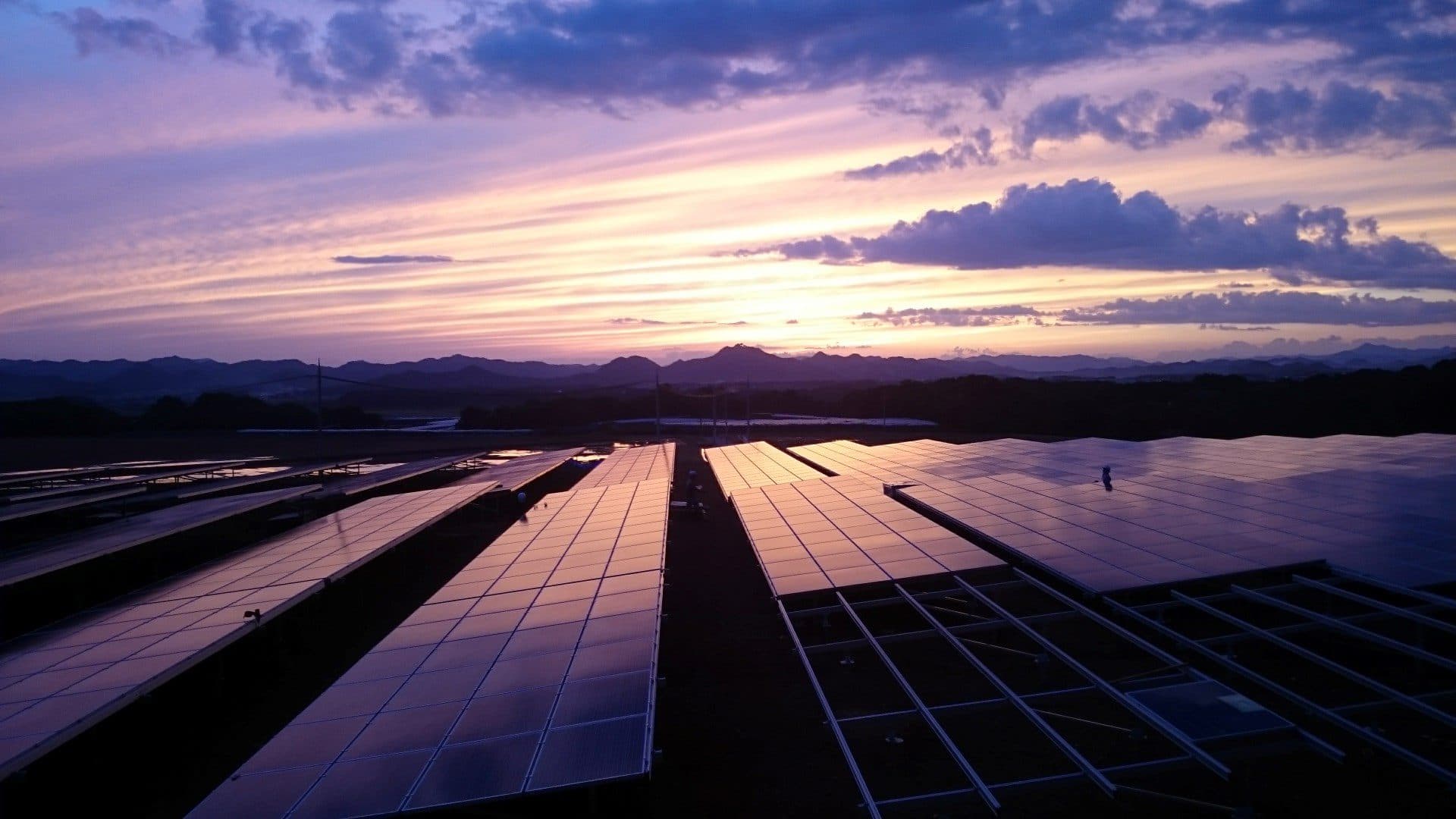
Europe has a solar manufacturing skills gap, and it’s widening. While the EU reached its 400 GW solar deployment target in 2025, adding 65.1 GW of new capacity, the path ahead is more complex. The EU Solar Market Outlook 2025–2030 points to a short-term easing in growth, followed by renewed momentum from 2028 (SolarPower Europe, 2025). As the market recalibrates, attention is turning to the structural foundations of the transition, including the role of domestic manufacturing in sustaining deployment and strengthening supply-chain resilience.
PV module manufacturing accounts for fewer than 41,000 jobs in Europe. That is less than 5% of the sector’s total workforce. Much of the continent’s manufacturing know-how has shifted to China, and rebuilding capacity means rebuilding skills too.
For workforce planners, this is both a strategic risk and an operational bottleneck. Global overcapacity and falling module prices have pushed several European producers to cut output or exit the market, increasing reliance on external supply chains. By 2025, Europe’s solar manufacturing base was facing growing challenges in aligning with its 2030 objectives, underlining the need to strengthen domestic manufacturing of solar PV technologies (SolarPower Europe, 2025). The challenge is no longer just deploying panels but rather ensuring Europe has the skilled workers to build them.

Expert Contributor
Dimitra Maleka is Skills Intelligence Manager at InnoEnergy Skills Institute, where she leads skills intelligence to support workforce development across Europe’s clean-tech industries. With 7+ years across EU workforce initiatives and a background in engineering, she helps align skills frameworks and learning programmes with Europe’s energy transition goals.
Why the solar manufacturing skills gap is also a workforce problem
In 2024, solar PV manufacturing supported 40,902 direct and indirect jobs in Europe, according to the EU Solar Jobs Report 2025 (SolarPower Europe, 2025). That figure represents less than 5% of the 865,312 jobs the solar industry supports overall. The imbalance between deployment and manufacturing capacity is stark, and it shows up directly in the labour market and in Europe’s ability to secure its energy supply chains.
Europe once led global solar PV manufacturing. Much of that industrial know-how has since moved elsewhere, particularly to China. Rebuilding manufacturing capacity, therefore, also means rebuilding skills. This is not a matter of replicating old capabilities. The technology has evolved, automation has increased, and the competencies required on a modern manufacturing line look very different from a decade ago. Workers today need fluency in automated systems, quality protocols, and data-driven maintenance: competencies that existing training pipelines were not designed to deliver at scale.
This challenge helped shape initiatives like the European Solar Academy. As one of the EU’s Net-Zero Industry Academies, it aims to strengthen upskilling and reskilling across the solar PV value chain, from cell fabrication to module assembly and quality assurance. The Academy works with industry partners and training providers to ensure that programmes reflect real workplace needs and not just theoretical frameworks.
What does this mean in practice? Today’s solar PV manufacturing environments are highly automated. Workers need to manage complex systems, diagnose faults, and adapt to rapid technological change. Skills systems must support continuous learning, recognise transferable competences from adjacent sectors, and enable cross-border talent mobility so that workers can move to where manufacturing capacity is being developed. Portable, industry-aligned credentials are critical enablers of this skills pipeline.
Responding to these needs, the European Solar Academy has launched Solar Module Manufacturing Fundamentals: a six-course programme designed to provide baseline knowledge for PV module manufacturing roles.
Translating ambition into job-ready skills: how the programme works
Solar Module Manufacturing Fundamentals is a practical response to a specific challenge facing Europe’s solar workforce development. Developed in partnership with RCT Solutions, the programme provides comprehensive baseline knowledge for PV manufacturing roles. It targets learners with engineering and technical backgrounds, preparing them for equipment-specific training in real manufacturing environments.
The six courses are delivered online and follow a cumulative, flexible structure organised into three tiers:
- Courses 1 and 2: Foundations. For operators or anyone needing baseline knowledge about PV system components and the setup of a module assembly line. Learners explore the manufacturing process step by step, from glass loading through lamination, framing, testing, and shipping, using an interactive 3D representation of a manufacturing line, where they can see each machine’s function and how components move through the process.
- Courses 3 and 4: Operations and quality. For both operators and engineers. These courses cover standard operating procedures, fault diagnosis, preventive maintenance, and documentation systems that support traceability and regulatory compliance. Quality management is embedded throughout, reinforcing how workers contribute directly to product reliability, certification compliance, and continuous improvement.
- Courses 5 and 6: Engineering depth. For engineers or operators looking to advance their careers. Topics include PV module components in detail, module design, and future trends in solar cell and module technology. These courses bridge the gap between operational competence and the engineering insight needed to drive process improvements and adapt to next-generation fabrication methods
Programme at a glance
The certification paths are designed to map directly to hiring and workforce planning needs:
- Courses 1-4 lead to PV Manufacturing Operator certification
- Courses 3-6 lead to PV Manufacturing Engineer certification
The deliberate overlap of Courses 3 and 4 reflects the shared competencies both roles require in operations and quality assurance. This means an operator who completes the full programme can progress to engineer certification without repeating coursework.
| Tier | Topics | Target Learners | Certification |
|---|---|---|---|
| Courses 1-2: Foundations | PV system components, assembly line setup, 3D manufacturing line walkthrough | Operators, new entrants | → Operator |
| Courses 3-4: Operations & Quality | SOPs, fault diagnosis, preventive maintenance, quality management | Operators and engineers | → Operator + Engineer |
| Courses 5-6: Engineering Depth | Module components, design, future trends, process optimisation | Engineers, advancing operators | → Engineer |
Credentials that travel across borders
Each course awards a micro-credential as a Certificate of Achievement upon successful assessment. These are issued as European Digital Credentials (EDCs), aligned with European skills frameworks and the Green Skills Framework and Taxonomy developed by InnoEnergy Skills Institute. The programme reinforces shared, industry-relevant standards for employers while supporting solar manufacturing workforce mobility across Europe.
Why does this matter? A solar PV operator certification earned in Poland should be recognisable in Spain or Germany without navigating national qualification systems. EDCs provide a common, verifiable format that travels with the learner. As talent mobility becomes increasingly important for scaling Europe’s solar PV manufacturing capacity, credentials that cross borders are not a nice-to-have but an essential infrastructure for the green skills transition. For employers, this also simplifies recruitment: a verified credential signals that a candidate meets a shared standard, regardless of where they trained.
From skills to roles: training built around solar manufacturing job profiles
The programme is deliberately organised around two core job profiles at the heart of solar PV module manufacturing. These profiles were developed using verified Skills Intelligence and reflect the actual competencies that employers need on manufacturing lines today:
- PV Module Manufacturing Operators are responsible for assembling PV modules using specialised equipment within a manufacturing line, ensuring quality, safety, and efficient operations.
- PV Module Manufacturing Engineers are responsible for optimising and supporting PV module manufacturing processes, analysing performance, and ensuring quality, automation, and process reliability across a manufacturing line.
This training, delivered online, focuses on core, transferable skills required across manufacturing environments. More detailed, equipment-specific competencies, such as operating particular machinery, are expected to be developed on-site. Some of the core skills addressed for each role include, but are not limited to, the following:
PV Manufacturing Operator:
- Photovoltaic Systems Parts and Functions
- PV Module Assembly Line Machinery and Processes
- Occupational Health and Safety
- Personal Protective Equipment (PPE)
- Manufacturing Equipment Operation
PV Manufacturing Engineer:
- Continuous improvement
- Design for manufacturability (DFM)
- Optimisation of manufacturing processes
- Corrective and preventive action
- Quality management
Full job profiles for both roles are available for download. Built on verified Skills Intelligence, each profile outlines key responsibilities, core skills, and advanced competencies to support workforce planning and capability development.

What’s in it for business? Aligning training with long-term workforce needs
Connecting solar PV manufacturing training to long-term talent needs is not just an educational exercise but a business enabler. When training is mapped to real manufacturing roles and shared standards, companies gain a more reliable skills pipeline of job-ready talent. This can reduce onboarding time, lower the risk of skills mismatches, and support faster ramp-up of new manufacturing lines.
The programme supports organisations at different stages: preparing new employees for automated environments, enabling internal mobility, and aligning skills development across suppliers and partners. Its modular structure and recognised credentials allow businesses to adapt training pathways as technologies and requirements evolve. Because each course is self-contained and stackable, employers can target specific skill gaps without committing to a full programme upfront.
For companies involved in supply chain development or expanding into solar fabrication, the programme also offers a way to benchmark workforce readiness against shared European standards, which is a practical advantage when coordinating across multiple sites or partner organisations. As Europe rebuilds its domestic manufacturing capacity, having a common skills framework helps align hiring, training, and quality expectations across the value chain.
This approach forms part of the Green Talent Accelerator framework developed by InnoEnergy Skills Institute. It connects role-specific skills, curated training, and industry-recognised certifications into a structured system for solar workforce development.
Whether you are scaling up a new manufacturing facility, upskilling an existing team, or building a supplier network with shared competency standards, this programme offers a structured starting point. If your organisation is exploring skills-first approaches to solar workforce development, we would be glad to hear from you.