

Commercialised by
Qkera
Lichtenbergstr. 4, 85748 Garching, Germany
The need
Next-generation battery architectures promise safer, more powerful, and cost-effective Li-ion batteries. These require solid electrolytes, where the trade-off is between high-performing but expensive and brittle oxide ceramics or more reactive, softer and cheaper polymer and sulfide electrolytes.
The solution
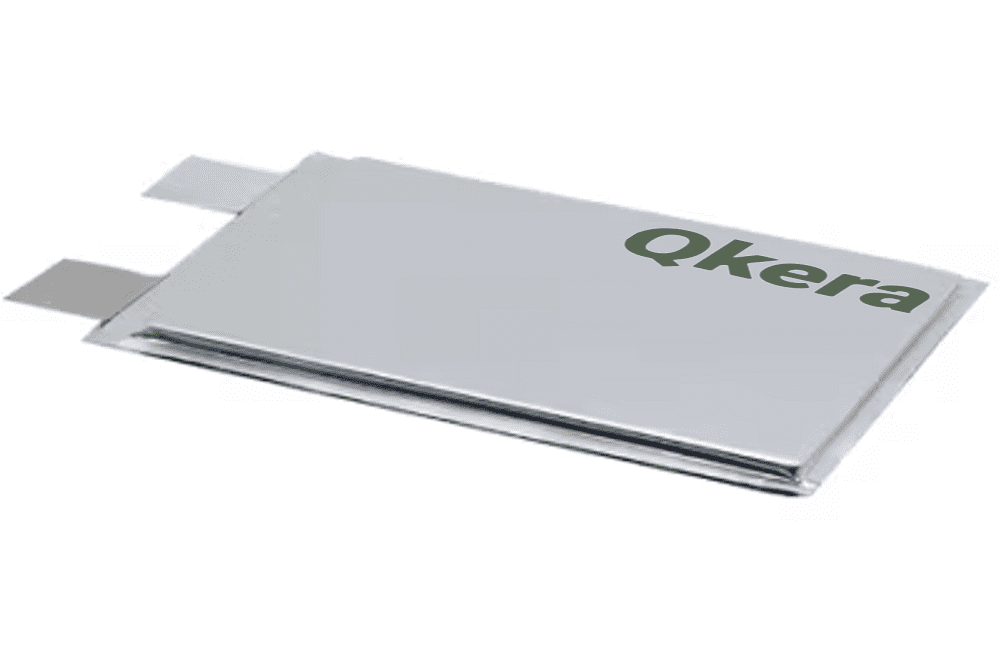
Qkera has spent over six years solving oxide ceramic electrolyte production challenges. Using a breakthrough chemical synthesis approach, it produces thin, flexible sheets of a widely field-tested oxide ceramic electrolyte as a drop-in product.
The value proposition
The material Qkera offers is considered the most promising candidate for next-generation batteries. The product provides flexible, ionically conductive oxide ceramic layers deposited on polymer electrolytes and separators. This resolves interface issues toward the cathode, providing a strong barrier for high-energy anodes. The sheets are processed using standard roll-to-roll methods, as with other battery materials. This offers mechanical robustness, low resistance, scalability, and low cost.