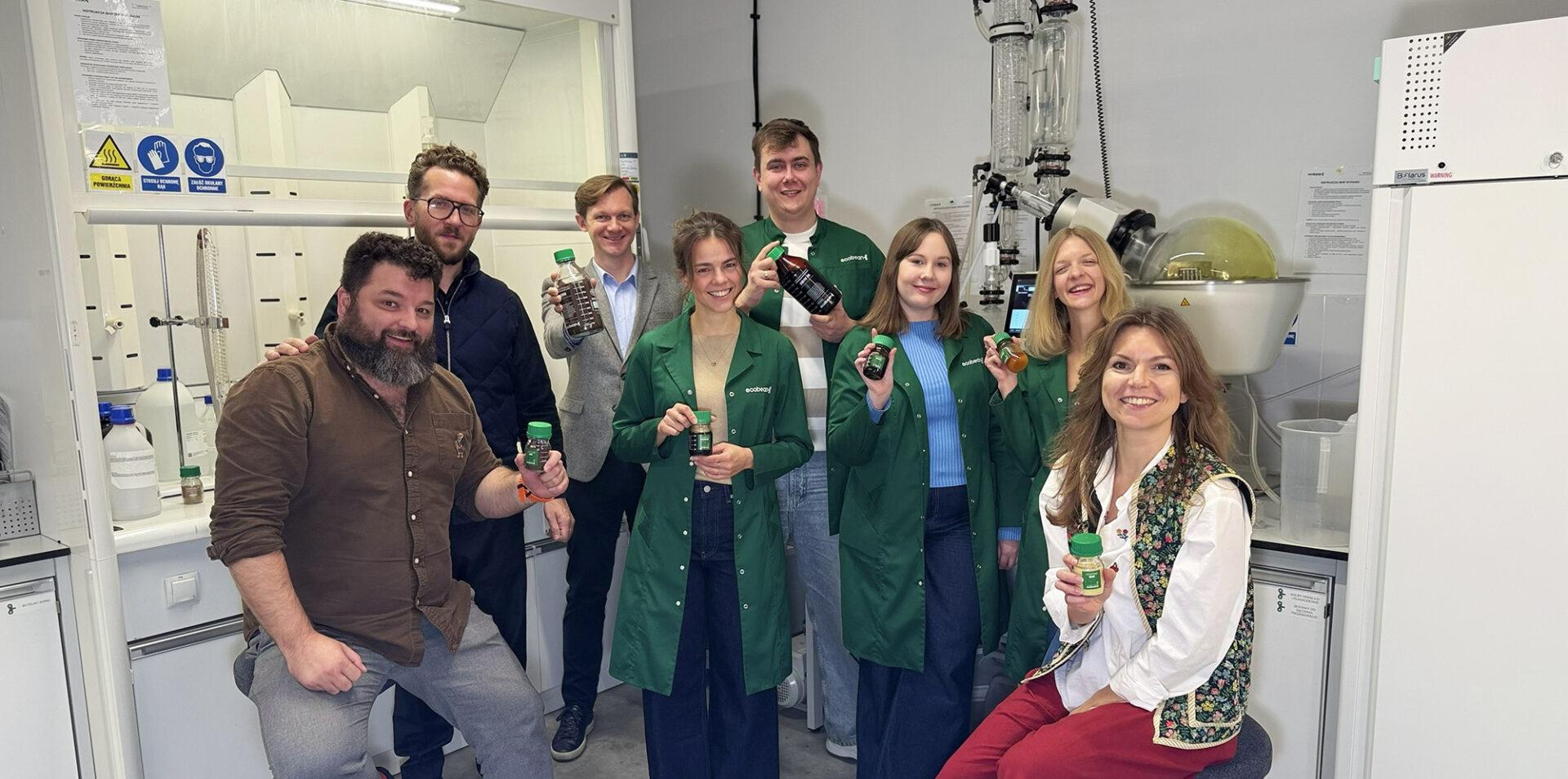
Blended finance backs a first-of-a-kind demonstration plant and a first full-scale industrial unit, while a €5.5 million co-investment round opens for strategic investors and VC funds
EcoBean, a Warsaw-based deep-tech company backed by InnoEnergy since 2019, has been selected for €7 million in blended finance from the European Innovation Council (EIC) Accelerator. The package combines €2.5 million in grant funding with up to €4.5 million in equity from the EIC Fund. Subject to the completion of formal procedures, the funding is intended to move EcoBean’s technology from pilot testing to industrial operation, with two modular biorefineries planned. EcoBean is one of only three companies from Central and Eastern Europe selected in this round.
From pilot to industrial scale: seven years of InnoEnergy support
InnoEnergy has backed EcoBean since 2019, combining equity investment with hands-on strategic and operational support. Beyond capital, the cooperation has covered fundraising and investor access, industrial scale-up, strategic partnerships, EU and public funding, and wider business development. Through InnoEnergy’s cleantech ecosystem, EcoBean has gained access to industrial partners and investors, helping to de-risk its path towards commercial deployment.
“We have been investing in EcoBean since 2019, supporting the development of a technology that turns coffee waste into valuable raw materials. The EIC’s decision confirms its potential and paves the way for the most important stage: deployment at industrial scale. Combining a grant with investment capital – so-called blended finance – reduces the risk of the first installations and makes it easier to attract further investors. Being selected from among 453 deep-tech applicants shows that Europe’s next industrial breakthroughs can come from every part of the continent,” says Mikołaj Budzanowski, CEO of InnoEnergy Central Europe.
Turning coffee waste into valuable industrial raw materials
Industrial coffee production, mainly instant and ready-to-drink coffee, generates more than 4.5 million tonnes of spent coffee grounds every year, concentrated in around 250 large facilities worldwide. Producers currently pay €60 to €140 per tonne to dispose of it, and incineration for energy recovery is the best use available today.
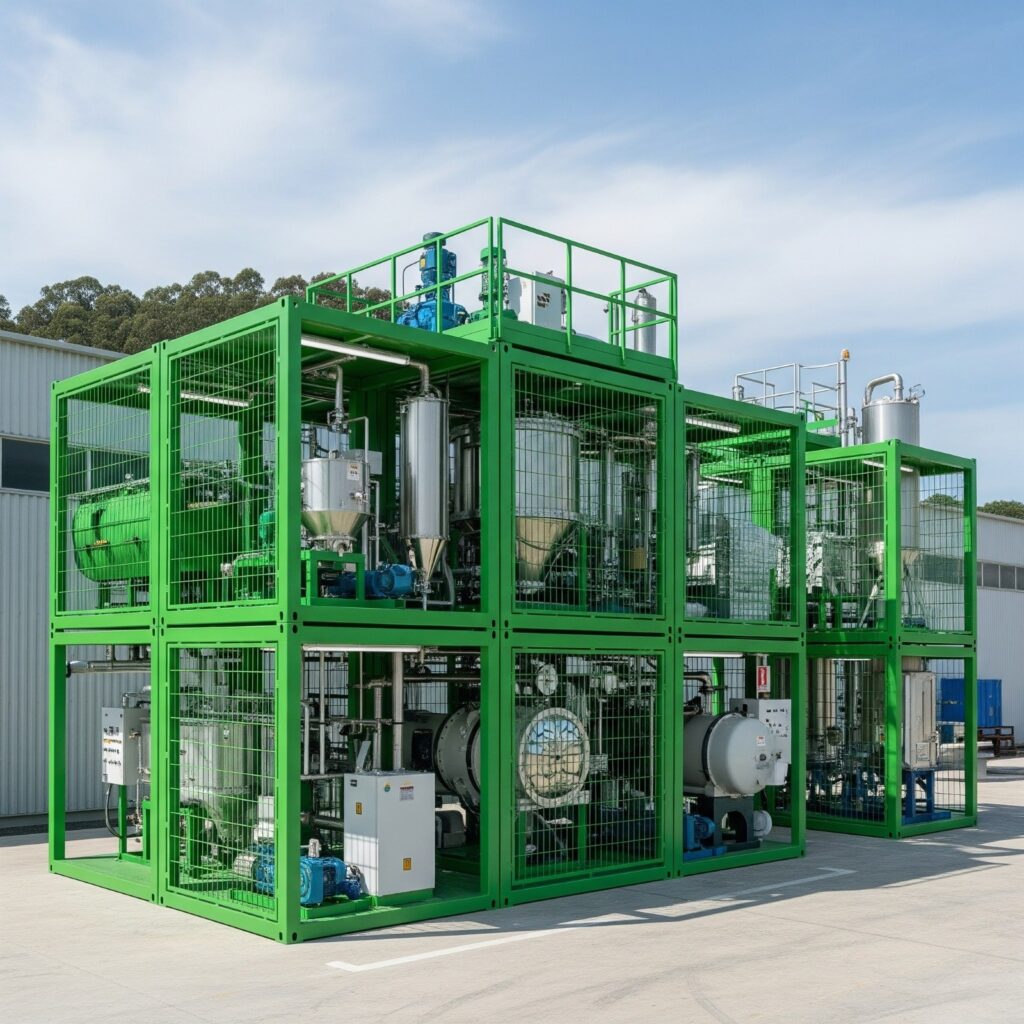
EcoBean’s patent-protected, continuous cascading process converts nearly 100% of this organic waste into five high-value raw materials: coffee oil, an antioxidant-rich extract, sugar syrup, waxes and lignin. These serve the cosmetics, food, pet food and biomaterials sectors. The modular biorefineries are installed directly on site at coffee plants, ultimately under a joint venture model.
“After eight years of R&D and more than 8,000 experiments, we are taking our technology out of the pilot phase and into operational industrial plants. EIC’s blended finance takes a significant share of first-deployment risk off private investors and enables us to simultaneously design and build both our FOAK demonstration unit and our first full-scale FID facility. We are now opening a co-investment round for VC funds looking to join at the industrial commercialization stage,” says Marcin Koziorowski, CEO and Co-Founder of EcoBean.
Two plants, one blueprint for roll-out
The total budget to bring EcoBean from TRL 6 to full commercial readiness (TRL 8/9) is €12.57 million. Alongside the €7 million from the EIC, which remains subject to the steps outlined below, EcoBean is seeking the remaining €5.5 million through its own contribution and a co-investment round that is now opening to strategic investors and VC funds. Once secured, the funding is intended to finance the engineering and construction of two modular facilities:
- FOAK demonstration plant: a first-of-its-kind modular biorefinery processing 200 tonnes of spent coffee grounds per year, integrated with a digital twin. It will validate continuous industrial-scale performance and supply certified batches of raw materials.
- Full-scale industrial unit (FID): a commercial plant processing 10,000 tonnes of feedstock per year, serving as the blueprint for further roll-outs.
“Scaling our technology to an industrial level is a breakthrough moment for us. This was the exact missing step needed for coffee industry leaders to verify our process efficiency in a real-world operating environment and base their deployment decisions on hard operational data,” adds Kacper Kossowski, Co-Founder and Board Member at EcoBean.
Closing Europe’s scale-up gap
The EIC Accelerator is the European Commission’s flagship programme for breakthrough deep-tech innovation and selects only a few percent of applicants across Europe. It targets the stage between validated pilot operation and industrial deployment, where the engineering risks of first-of-a-kind plants often deter venture capital on its own. InnoEnergy works at exactly this point: as a long-term investor and partner, it helps European deep-tech companies move from the lab and pilot phase into industrial deployment, combining capital with access to industrial partners, investors and public funding.
Next steps
The “GO” decision is not yet a formal commitment to disburse funds. EcoBean will now complete the standard legal and financial checks and due diligence. These lead to the signing of the grant agreement (€2.5 million) and the EIC Fund’s investment process (up to €4.5 million), after which the final funding decision will be issued.